Destination Wedding Invitation Timeline: Save the Dates to RSVPs
For a destination wedding, send save the dates 9 to 12 months before the date, invitations 10 to 12 weeks before (up to 6 months if guests need visas), and set the RSVP deadline 5 to 6 weeks before. Those are the conventions US stationers published in 2026. The deadlines that actually bind you are your hotel block's release date and your venue's final headcount date, so build the timeline backward from those.
A destination wedding runs on two calendars: yours, with venue contracts and headcounts, and your guests', with flights, hotels and days off. The invitation timeline is where the two meet. Send too late and guests pay more or stay home; send too early and the details change before anyone acts on them. This guide lays out the whole sequence, from the first save the date to the final headcount, with the conventions behind each step and a worked example with real dates.
The timeline at a glance
| When | What goes out | Why then |
|---|---|---|
| 12 to 18 months before | Venue signed, hotel block reserved, wedding website started | Everything below depends on a fixed date and a place to sleep |
| 9 to 12 months before | Save the date, with airports, hotel area or block, website | Guests can book flights and request time off |
| 6 to 9 months before | Website complete: travel, lodging, schedule outline, FAQ | Guests who book early have somewhere to look |
| 4 to 5 months before | Invitation design finalized (printed) or ordered (digital) | Printing, proofing and mailing take weeks; a digital invitation takes days |
| 10 to 12 weeks before | Invitation, with the full schedule, venue details, dress code and RSVP deadline | Guests who have not booked still can; those who have confirm the details |
| 7 to 8 weeks before | First RSVP reminder to guests who have not replied | Leaves time for a second nudge before the deadline |
| 5 to 6 weeks before | RSVP deadline | Hotel blocks and venue counts abroad close early |
| 4 weeks before | Chase the last replies, by phone if needed | The caterer's number is due soon |
| 2 to 3 weeks before | Final headcount to the venue, seating chart done | Most contracts ask for the count around here; check yours |
| 1 week before | Final details message: timings, transport, weather, a phone number | Guests are packing and want one clear message |
Hold two dates from your own contracts against this table: the day the hotel releases unsold rooms and the day the venue needs a final number. If either is earlier than the table assumes, move the RSVP deadline and the invitation earlier with it.
Where the conventions come from
The figures above are not rules, and the sources do not fully agree. Here is what the main US and UK guides said in their most recent versions, so you can see the range:
| Source | Save the date | Invitation | RSVP deadline |
|---|---|---|---|
| Bliss & Bone, "When to Send Wedding Invitations" (updated July 14, 2026) | 8 to 12 months | 10 to 12 weeks; up to 6 months for visa destinations | 5 to 6 weeks |
| Paperlust, 2026 trends guide FAQ (March 2026, updated October 2026) | 8 to 12 months | 10 to 12 weeks for destination or international guests | not stated |
| Paperless Post, "When to send save the dates" (April 23, 2026) | 8 to 12 months | 6 to 8 months | not stated for destination |
| Zola, "When to Send Save the Dates" (updated July 1, 2025) | 8 to 12 months | not stated | not stated |
| Papier (UK), "When to send wedding invitations" (updated October 2026) | 6 months to 2 years; most often around 12 months | at least 2 months; 4 to 6 months without a save the date | not stated |
Everyone agrees on the save the date window. The invitation is where they split: most say about three months; Paperless Post says six to eight. Our reading is that the split comes down to whether a save the date went out. If guests have had the date for nine months, an invitation at 10 to 12 weeks is enough. If the invitation is the first message, it needs to do the save the date's job too, and six months is not too early.
A worked example: Lake Como, Saturday, June 19, 2027
Suppose the wedding is at a villa on Lake Como, with guests flying from the United States and a few from the United Kingdom. Here is the sequence with actual dates.
- Save the dates: June 19 to September 19, 2026. Earlier in that window for the US guests, who are booking transatlantic flights for peak season. Include Milan Malpensa and Linate as airports, the hotel area (Varenna, Bellagio, Menaggio) or the room block, and the website.
- Website complete: by December 2026. Travel, lodging, a rough schedule, and a note on what to pack for June by the lake.
- Invitations: March 27 to April 10, 2027. Ten to twelve weeks out. If any guest needs a visa for Italy, send theirs by December 19, 2026, six months ahead.
- First reminder: around May 1, 2027. A short message to anyone who has not replied.
- RSVP deadline: May 8 to May 15, 2027. Five to six weeks out. If the hotel block releases on April 30, the deadline moves to late April.
- Final headcount: around June 5, 2027. Two weeks out, or whatever the villa's contract says.
- Final details: around June 12, 2027. Transfers from the airport, the time the boats leave, the dress code for the welcome dinner, a phone number that works in Italy.
Shift every date by the same number of days for your own wedding. The structure holds for Tuscany, the Riviera, the Greek islands, Mexico or Ireland; only the airports change.
What your guests have to book, and when
The timeline works because it matches the guest's own list of tasks. Knowing that list makes the dates less arbitrary.
Flights. Airlines generally open bookings close to a year ahead, and summer fares to Europe climb through the spring. A save the date at 9 to 12 months lands when guests can book at reasonable prices. A first message at 12 weeks does not.
Time off. Many employers want vacation requests months ahead, and a destination wedding usually means three to five days away. Guests who work shifts, teach, or serve in the military need the longest notice of all.
Passports. Many countries require a passport valid for three to six months beyond the travel dates, and routine renewals take weeks. The State Department publishes current processing times; a one-line reminder on the save the date sends guests to check early.
Visas and travel authorizations. Some guests will need a visa; others will need an electronic authorization even where no visa is required, such as the United Kingdom's ETA, which already applies to US visitors, or the European Union's planned ETIAS for the Schengen area. Check the official site of your destination for the current rule, and tell guests where to look.
Hotels. A room block is the most useful thing you can give traveling guests, and the most time-sensitive. Put the hotel name, the code and the release date on the save the date, not just on the invitation.
Children, pets, work. Guests with young children or dogs need to arrange care for several days. The only help you can give is early notice.
Multi-day weddings and welcome parties
Most destination weddings are weekends rather than days: a welcome dinner on Friday, the wedding on Saturday, a brunch or a boat on Sunday. Two timing consequences:
- Say "plan for a long weekend" on the save the date. Guests book Thursday-to-Monday flights instead of Friday-to-Sunday, and they do it when fares are lower.
- Put the full schedule on the invitation, and invite each event explicitly. A guest who flies in should not have to guess whether the Friday dinner includes them.
If the guest list differs by event, a close family group at the Friday dinner and everyone at the wedding, the invitation should show each guest only the events they are invited to. Our invitations handle this with versions by guest group: two with the Essential plan, four with Signature, as many as you need with Bespoke. Each version shows only its own events, so the question never comes up.
RSVPs from abroad
The RSVP deadline for a destination wedding sits at 5 to 6 weeks, earlier than for a local wedding, because the deadlines around it are earlier. Three habits make the number come in on time:
- Make replying take under a minute. A reply by text or a form on the invitation itself gets answered on the day it is read; a card to mail back from another country does not.
- Ask for what you need in one pass. Attendance, meal choice, the events they will attend, dietary needs, and whether they are using the room block. Asking twice loses people.
- Plan the chase. Expect to follow up with a share of the list regardless of how clear the deadline was. A reminder a week before the deadline and a phone call the week after cover almost everyone.
On attendance rates, be careful with the numbers you will find online. We have not found a published study that measures what share of invited guests attend a destination wedding, and the percentages repeated on planning blogs do not cite one. Attendance depends on distance, cost, season, and how early guests were told. Plan with a hotel block you can reduce and a venue minimum you can meet with your closest guests, and let the RSVPs decide the rest.
Couples in the Southern Hemisphere
The conventions above come from US and UK sources and assume a northern summer. If you are marrying in Australia, New Zealand, South Africa, Brazil or Argentina, the same lead times apply, but the calendar around them shifts:
- Peak season runs roughly November to March, and its busiest weeks collide with the December and January holidays, when guests from Europe and North America are already traveling and fares are highest.
- For a wedding between mid-December and late January, treat it as a holiday-weekend wedding: save the dates at 12 months, invitations at 12 weeks.
- Guests flying from the northern hemisphere cross more time zones than a US guest flying to Italy. Plan the welcome event for the day after most arrive, not the day of.
Where a digital invitation changes the timeline
Printing adds four to five months of lead time before the invitation can go out, according to both Bliss & Bone and Paperlust, and international mail adds one to three weeks after that. A digital invitation removes both.
Our invitations are a private page for your wedding, delivered as a link. The first version is ready in 5 to 10 business days with the Essential plan, 7 to 14 with Signature and 14 to 21 with Bespoke, with a 3-business-day rush option for Essential. Once ready, it reaches a guest in Sydney and a guest in Boston in the same second, in the language each one chooses. Details can be updated after sending, so a new transfer time does not mean a second mailing, and the RSVPs come back into one guest list, with the seating chart built from it. The save the date that opens the sequence is included with the Signature plan, from the collection.
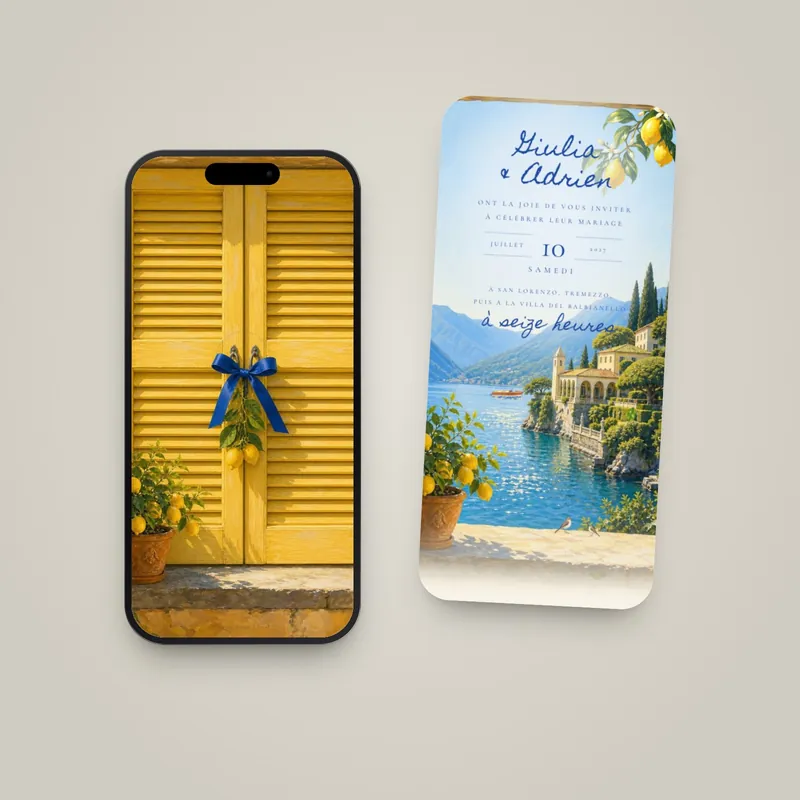
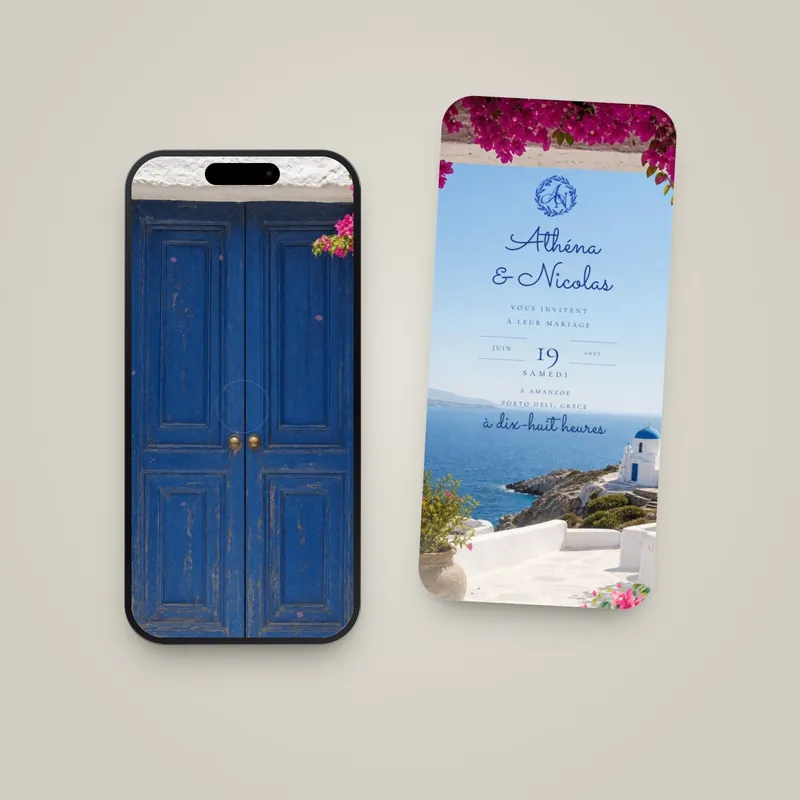
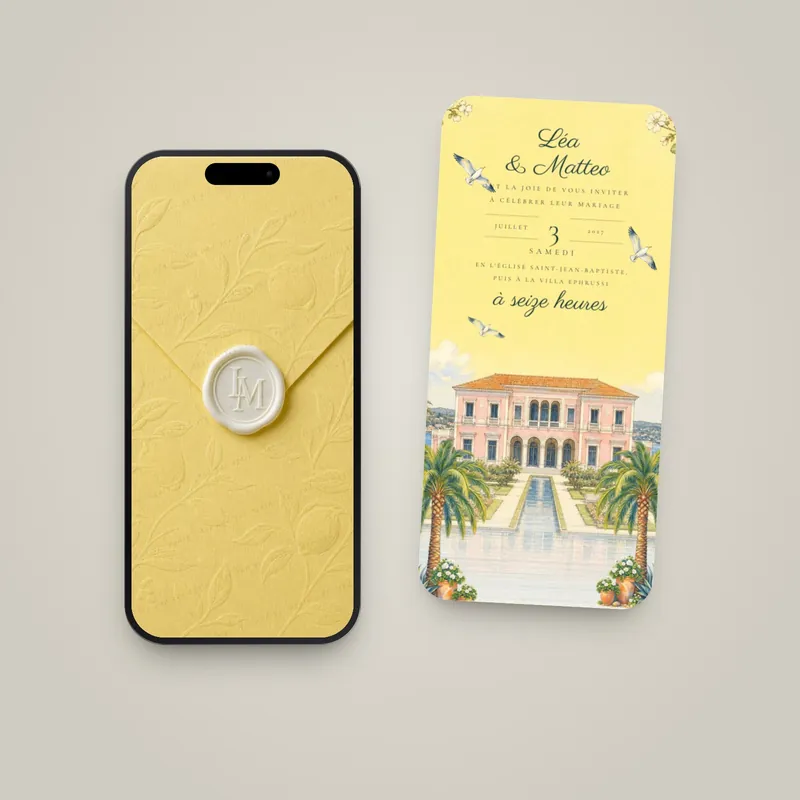
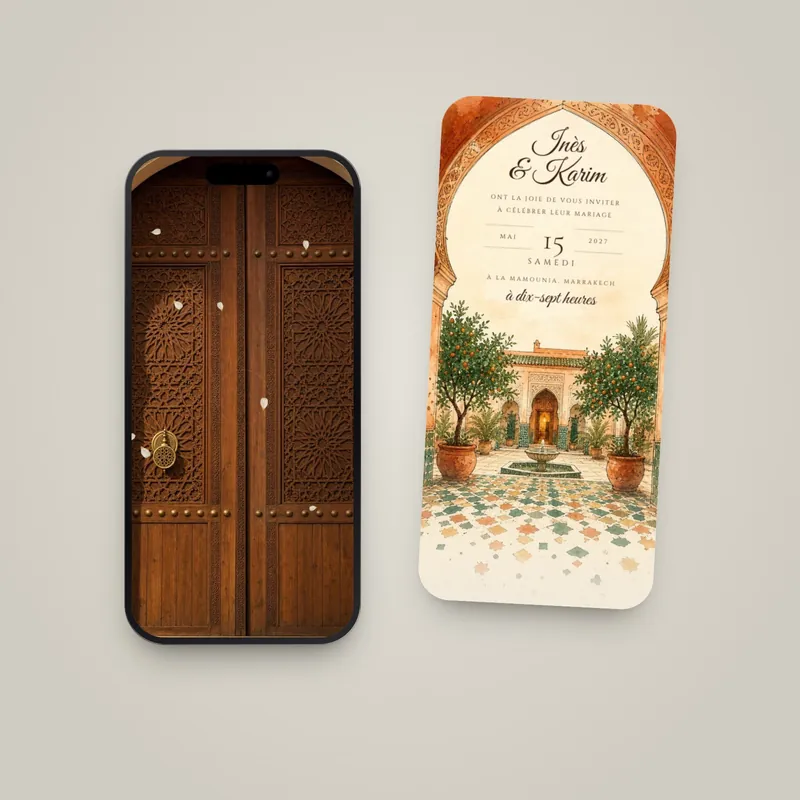
The design can also carry the destination itself. Limoncello opens shutters onto Villa del Balbianello and Lake Como; Cyclades opens a blue door onto the Aegean; Riviera is Villa Ephrussi at Saint-Jean-Cap-Ferrat; L'Orangerie is Marrakech, with cedar doors, zellige and lanterns. For the text of the first message, our destination wedding save the date guide has ten examples that include airports, room blocks and a passport reminder.
Before you send the invitation: a checklist
- The save the dates went out 9 to 12 months ago, or you are sending the invitation early enough to replace them.
- The website has travel, lodging and a schedule, and every link on it works.
- The room block code and release date are on the invitation or one tap away.
- The RSVP deadline is at least a week before your hotel block releases and two weeks before your venue's headcount date.
- Each guest sees the events they are invited to, and nothing else.
- Someone on your side has a phone number that works in the destination country, and guests have it.
- You have opened the invitation on your own phone, on cellular data, and read it as a guest would.
When all seven hold, send it. The general rules for every kind of wedding, local included, are in our pillar guide on when to send wedding invitations.
Frequently asked questions
When do destination wedding invitations go out?
Ten to twelve weeks before the wedding, about three months. Bliss & Bone's 2026 timeline gives 10 to 12 weeks, Paperlust gives 10 to 12 weeks for destination or international guests, and Paperless Post goes earlier, at 6 to 8 months. If guests need visas, send at the early end or earlier.
How far in advance should guests know about a destination wedding?
Nine to twelve months, through a save the date. That is when flights open and when guests can still take the days off. The invitation three months out confirms details; it should not be the first time guests hear the date.
When should the RSVP deadline be for a destination wedding?
Five to six weeks before the wedding, earlier than the 3 to 4 weeks usual for a local one. Hotel blocks and venue headcounts abroad tend to close earlier, and you will need a week or two to chase the guests who have not replied.
Should international guests get the invitation earlier than local guests?
Yes, if you have both. Sending the traveling guests at 12 weeks and the local guests at 8 weeks is a common approach; sending everyone at 12 weeks is simpler and costs nothing.
What percentage of invited guests attend a destination wedding?
We have not found a published study that measures this reliably, and the figures repeated on planning blogs are not sourced. Attendance depends on distance, cost, season and how early guests were told. Plan with your own RSVPs and a hotel block you can reduce, not with a percentage.
What if guests need a visa?
Tell them on the save the date, nine to twelve months out, and send the invitation earlier than usual, up to six months before. Visa appointments and passport renewals can take weeks, and some guests will need both.
We are already inside three months. What now?
Send the invitation this week, with the room block, the airports and the website, and call the guests who are most likely to travel. Set the RSVP deadline four weeks out and expect to chase.
Designs in this guide
An invitation that opens on their phone
23 designs, each with its own animated intro and a live demo to open before you order. From $69, one-time payment, built-in RSVP.
Keep reading
Send wedding invitations 6 to 8 weeks before the day, earlier for out-of-town guests. Month-by-month table, UK and destination rules, worked dates.
Guide · 9 min readDestination Wedding Save the Dates: Timing, Wording, ExamplesDestination wedding save the dates go out 9 to 12 months ahead. What to include (travel, hotels, website), wording examples and designs for your venue.
Guide · 7 min readWhen to send save the dates (local, destination and digital)Send save the dates 6 to 8 months ahead, or 9 to 12 for a destination wedding. A timeline for every case, with real dates and the digital option.
Guide · 10 min readSave the date examples: 60 wordings to copy for every tone60 save the date examples to copy: formal, simple, fun, short, destination, small weddings, adults only, the text for a digital save the date.
All articles · Invitations · Complete guide: When to Send Wedding Invitations: The Complete Timeline