Save the date etiquette: who gets one, plus-ones and the rules
Send a save the date only to people you're certain to invite, because everyone who receives one expects an invitation. Name every guest who is invited, including a known partner, and write “and guest” only for a plus-one you have already confirmed. If plans change, tell everyone quickly on the same channel.
Etiquette questions about save the dates almost all come back to one principle: a save the date is a promise. It tells people that an invitation is coming and that they should plan for it. Every rule below follows from that.
The rules in one table
| Question | Short answer |
|---|---|
| Who gets a save the date? | Everyone on your final guest list, and only them |
| Can I uninvite someone after a save the date? | Not without a real reason and a personal conversation |
| Plus-ones? | Only if already decided; name known partners |
| Children? | Name the invited children; adults only means addressing adults |
| Wedding party and parents? | Yes, send theirs first |
| Coworkers? | Only the ones you'll invite |
| Evening-only or reception-only guests? | Yes, if they will be invited; say so on the invitation |
| Must the format match the invitation? | No; the look should, the format doesn't have to |
| Is a digital save the date polite? | Yes, with a personal message |
Who should receive a save the date
Everyone you'll invite, without exception
Sending save the dates to some guests and not others is possible, but it creates questions. Guests talk, and the ones who received nothing will wonder whether they're invited. If you send save the dates at all, send them to the whole list.
The usual exception is a wedding where only distant guests need the early notice. Even then, sending to everyone is simpler and avoids a hierarchy between guests.
Only people you're certain to invite
This is where couples get into trouble. If your list is still moving, if you're waiting to see the venue's capacity or the budget, keep the uncertain names off the save the date list. You can still invite them later with the invitation; you can't easily take back a save the date.
An A-list and a B-list
Some couples keep a second list of guests to invite if others decline. Don't send save the dates to the second list. Those guests receive only the invitation, sent early enough to give them a reasonable amount of time, which is one reason to keep the RSVP deadline well ahead of your caterer's deadline.
Plus-ones
Known partners
Married couples, engaged couples and partners who live together are invited together, by name. “Sarah Lin and David Kim” is correct; “Sarah Lin and guest” when you know David isn't.
“And guest”
Write “and guest” only when the seat is confirmed and you don't know the person's name. Once a guest reads “and guest,” they may tell a partner, book two flights or arrange childcare. Removing that seat later is awkward for everyone.
Not decided yet
Address the save the date to the guest alone. Make the decision before the invitation, and be consistent: a clear rule (partners of two years or more, for example) is easier to explain than case-by-case choices.
Children
Name the children who are invited, either individually or as “the Martin family” if all children are included. For an adults-only wedding, address the save the date to the adults only. Usually, don't write “adults only” on the save the date itself; say it kindly on the invitation and on your wedding website, where you have room to explain. The exception is a destination wedding, where parents need months to arrange childcare: there, one soft line helps. Our guide to no kids wedding wording has polite versions for each place, and our save the date examples include two adults-only lines.
Family, wedding party and coworkers
- Parents and the wedding party know the date already. Send theirs anyway, and first: it's a nice moment, and many parents keep them.
- Your officiant, if they're a friend or a family member, should also receive one.
- Coworkers: only the ones you'll invite. Don't post the save the date in a team chat; send it individually.
Digital save the dates: specific etiquette
Digital is now standard, but a few habits keep it personal:
- Send each household its own message, with a line in your own words.
- Don't share a long list of numbers in a group chat.
- For guests who rarely open links, call or mail a card.
- Don't post the save the date publicly on social media if not everyone who sees it is invited.
The full method is in our guide on how to send save the dates by text, WhatsApp and email.
Timing etiquette
The usual windows are 6 to 8 months before a local wedding and 9 to 12 months before a destination wedding. Sending much later isn't rude, but it may cost you guests who already have plans. The details, with dated examples, are in when to send save the dates.
Matching your invitation
The save the date and the invitation don't have to be the same format, but they should look like they belong to the same wedding. That's why several of our save the dates have an invitation of the same name and style in the collection: the Swan Lake save the date and the Swan Lake invitation, or the Eclipse save the date and the Eclipse invitation.
When plans change
The date or city changes
Tell everyone who received a save the date, on the same channel, as soon as the new plan is certain. Our wording guide has change-the-date examples. If you sent a digital save the date, update the page too, so anyone who opens it later sees the right date.
The guest list shrinks
If you need to reduce the list after save the dates are out, the polite options are limited. In most cases, keep everyone who received one and cut from the names that were not yet announced. If you truly must withdraw an invitation, do it by phone, explain honestly, and never by text.
The wedding is postponed or canceled
Send a short, clear message to everyone, without long explanations. Guests mainly need to know whether to cancel travel. If you have booked a hotel block, contact the hotel before you message guests, so you can tell them what happens to their reservations.
What to put on it, briefly
Names, date, city or region, and “invitation to follow.” A wedding website if it's ready and useful, especially for travel. No registry, no RSVP request, no dress code: those belong on the invitation.
Frequently asked questions
Do you have to invite everyone who gets a save the date?
Yes. A save the date is a promise of an invitation. Taking it back is one of the few real etiquette mistakes in wedding planning, so only send it to people on your final list.
Do you have to send save the dates?
No. They're optional. They're most useful for destination weddings, holiday weekends and guests who travel. For a small local wedding or a short engagement, the invitation alone is fine.
Should plus-ones be on the save the date?
Only if the plus-one is decided. Name a known partner; use “and guest” only when the seat is confirmed but you don't know the name. If you haven't decided, address the save the date to the guest alone and decide by the invitation.
Do you send save the dates to the wedding party and parents?
Yes. They already know the date, but the save the date is part of the experience, and some of them will want to keep it. Send theirs first.
Can you send save the dates before booking a venue?
Only if the date and city are final. If the date depends on the venue, wait until the contract is signed.
Should children be named on the save the date?
Name the children who are invited. If the wedding is adults-only, address the save the date to the adults; explain the policy on the invitation or the website rather than on the save the date.
Designs in this guide
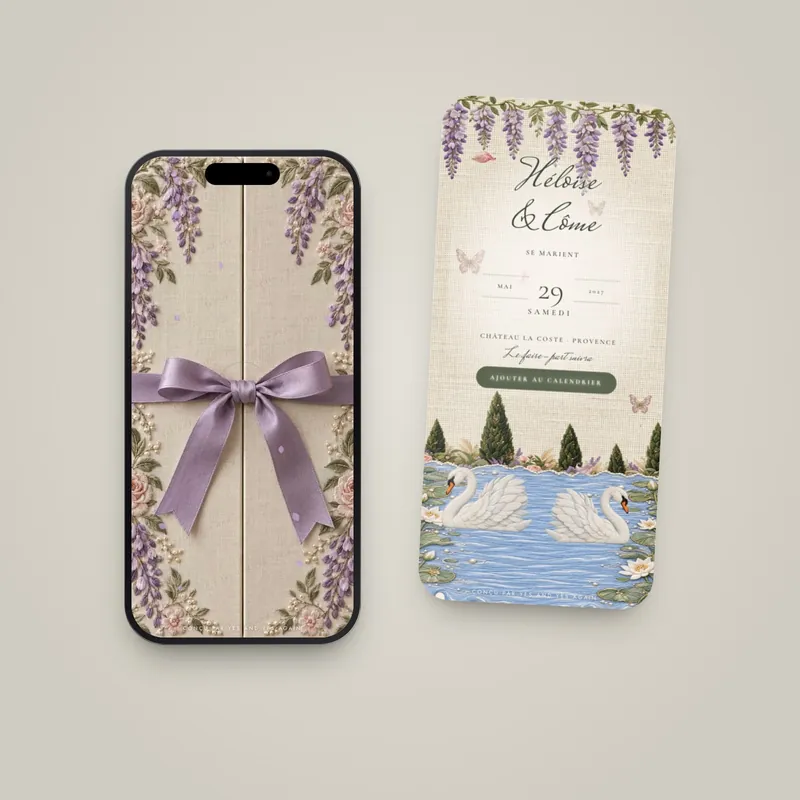 Save the date
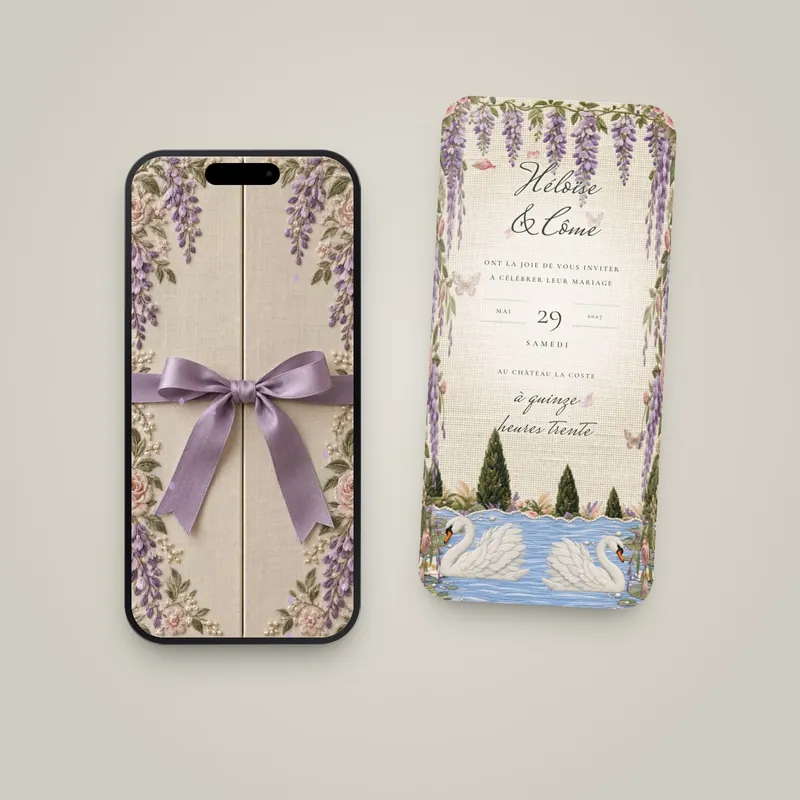
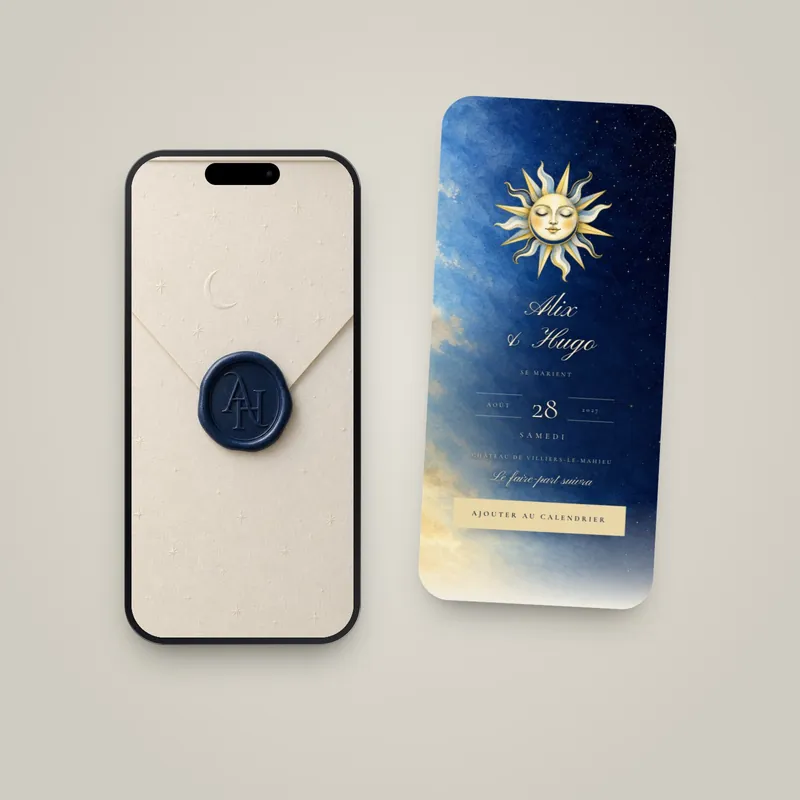 Save the date
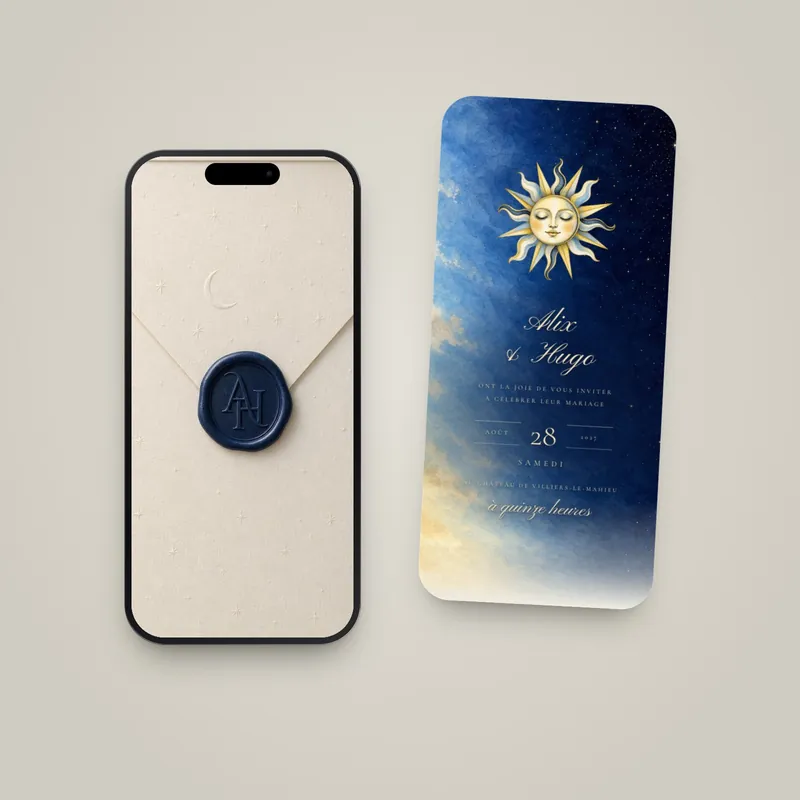
A save the date that opens on their phone
11 animated designs, each with a live demo to open before you order. $29 per design, delivered within 3 business days; included with Signature.
Keep reading
Send save the dates 6 to 8 months ahead, or 9 to 12 for a destination wedding. A timeline for every case, with real dates and the digital option.
Guide · 10 min readSave the date examples: 60 wordings to copy for every tone60 save the date examples to copy: formal, simple, fun, short, destination, small weddings, adults only, the text for a digital save the date.
Guide · 9 min readDestination Wedding Save the Dates: Timing, Wording, ExamplesDestination wedding save the dates go out 9 to 12 months ahead. What to include (travel, hotels, website), wording examples and designs for your venue.
Guide · 6 min readDigital vs. paper save the dates: which one fits your weddingDigital vs. paper save the dates: cost, timing, etiquette and which guests still need a card. A side-by-side table and the mixed approach many couples use.
All articles · Save the dates · Complete guide: When to send save the dates (local, destination and digital)