Save the Date vs Wedding Invitation: What Each One Is For
A save the date is early notice: your names, the date, the city and the words "invitation to follow." The wedding invitation is the formal request to attend: times, venue, dress code, travel details and how to RSVP by a deadline. The save the date goes out 6 to 12 months ahead and is optional; the invitation goes out 6 to 12 weeks ahead and is not.
Couples ask this question for a practical reason: they are about to pay for one of the two, or both, and want to know what each one actually does. The short answer is that the save the date protects a date and the invitation fills it in. Everything else, from timing to wording to who receives which, follows from that.
The difference in one table
| Save the date | Wedding invitation | |
|---|---|---|
| Job | Hold the date before guests make other plans | Ask guests to attend and give them everything they need |
| When it goes out | 6 to 8 months before a local wedding, 9 to 12 for a destination wedding | 6 to 8 weeks before a local wedding, 10 to 12 weeks when guests travel |
| What it says | Names, date, city or region, "invitation to follow" | Hosts, names, date and time, venue and address, dress code, schedule, travel and lodging, RSVP deadline |
| What it asks | Nothing | A reply by a set date, usually with meal choices and the number of seats |
| Who gets one | Everyone on the final guest list, and only them | Everyone on the guest list, including those who received a save the date |
| Required? | Optional | Yes |
| Usual channel | Card, magnet, text, WhatsApp, email | Printed suite by mail, or a link sent by text, WhatsApp or email |
| Cost | A simple card, or a single digital design for the whole list | The larger piece of the stationery budget, printed or digital |
The timing rows reflect the conventions published by US stationers in 2026. Paperless Post's etiquette guide (April 2026) gives 4 to 6 months for a local save the date and 2 to 3 months for the invitation; Bliss & Bone's timeline (updated July 2026) gives 6 to 8 weeks for invitations and 10 to 12 weeks when guests travel. Our pillar guides on when to send save the dates and when to send wedding invitations show the full range, with worked dates.
What a save the date is for
A save the date has a single purpose: to reach guests before their calendars fill. For a Saturday in June, that competition starts the previous fall, when people plan vacations, reunions and other weddings. For a destination wedding it starts even earlier, because flights and time off need to be arranged.
Because its job is early notice, a save the date stays deliberately thin. It says who is getting married, when, and roughly where. It ends with "invitation to follow" or "details to come," which tells the guest two things: this is not the invitation, and no reply is needed yet. A wedding website address is a useful addition when guests travel, since they will look for hotels right away. Our 60 save the date examples all keep to this shape.
A save the date is also a promise. Whoever receives one expects an invitation to follow, which is why it only goes to people on your final list. The etiquette guide covers the gray areas: plus-ones, children, coworkers and guests you are not sure about.
What the invitation is for
The invitation is the formal request to attend, and it carries the information a guest needs to say yes and show up in the right place at the right time:
- who is hosting and who is getting married;
- the date, the ceremony time and the venue, with its address;
- the reception, if it is somewhere else or starts later;
- the dress code;
- travel and lodging details, or a website where they live;
- how to reply, and by what date.
It is the piece that triggers action. Guests book, choose a meal, confirm their plus-one and put the whole day in their calendar. The RSVP deadline on it is the date that drives your final headcount, your seating chart and your caterer's count, which is why it is set 3 to 4 weeks before the wedding for a local event and 5 to 6 weeks before for a destination wedding.
How the two fit together
Think of them as one sequence with a long pause in the middle:
- Save the date, 6 to 12 months out. Guests block the weekend and, if they travel, start looking at flights.
- Invitation, 6 to 12 weeks out. Guests get the details and reply.
- RSVP deadline, 3 to 6 weeks out. You close the list.
Sending a save the date does not move the invitation earlier. It allows you to keep the invitation on its normal schedule, because guests already know the date. What moves the invitation earlier is the absence of a save the date, travel, or a holiday weekend.
Do you need both?
You need the invitation. Whether you need the save the date depends on how much notice your guests need.
| Send both when | Skip the save the date when |
|---|---|
| Many guests fly or drive a long way | Most guests live nearby and the wedding is small |
| The wedding is on a holiday weekend or in peak summer | The engagement is under about four months |
| The engagement is long and the date is set early | You are still deciding between a long list and a short one |
| You want the date in calendars before a busy season | You prefer one message, sent early: the invitation at 10 to 12 weeks |
The one situation where skipping the save the date causes trouble is a destination wedding. Guests cannot book international travel on 12 weeks' notice without paying for it, and a wedding abroad with a late invitation tends to lose the guests who would have come with more warning. Our guide to destination wedding save the dates explains what to include so guests can start planning from the first message.
What goes on each one
The most common mistake is putting invitation information on the save the date. It makes the save the date crowded and sets up questions later when a detail changes.
| On the save the date | On the invitation only |
|---|---|
| Both names | Full names of the hosts, if parents are hosting |
| The date, written in full | Ceremony time and reception time |
| City or region | Venue name and street address |
| "Invitation to follow" | Dress code |
| Optional: wedding website, a photo or illustration, "plan for a long weekend" | Lodging, room blocks, transportation |
| Schedule of the weekend's events | |
| RSVP instructions and the deadline | |
| Registry, if you mention it at all, on the website rather than the card |
Write the date in full when guests live in more than one country. "06/12/2027" reads as June 12 in the United States and December 6 almost everywhere else; "Saturday, June 12, 2027" cannot be misread. For the invitation's own text, hosts, formal and casual versions, our wedding invitation wording guide has 100 examples.
Do they have to match?
They should look like they belong to the same wedding: the same palette, the same kind of typography, the same mood. They do not have to be the same format. A digital save the date followed by a printed invitation is common, and so is the reverse, a printed card on the fridge and a digital invitation that carries the RSVP.
This is why several of our save the dates share a name and a style with an invitation in the collection. The Swan Lake save the date and the Swan Lake invitation use the same embroidered card, lilac ribbon and wisteria; the Eclipse save the date and the Eclipse invitation share the sun-and-moon seal and the sky that turns from day to night. Guests recognize the second message the moment it opens.
Who gets which
- Everyone who receives a save the date receives an invitation. There is no polite way around this, so settle the guest list before the first message goes out.
- Some guests receive only an invitation. Evening-only guests at a UK wedding, reception-only guests, or anyone added after the save the dates went out.
- A "B list" cannot receive a save the date. If you plan to invite a second group as declines come in, they get an invitation later, and the first group's save the dates must not reach them.
- Parents and the wedding party get both. They know the date already; the save the date is part of the experience, and some will keep it.
Where digital changes the pair
With printed stationery, the save the date and the invitation are two production runs, each with design, proofing, printing, addressing and postage. The save the date exists partly because the invitation takes so long to produce that it cannot go out early.
With a digital pair, the logic shifts. A save the date from our collection is delivered within three business days of the order and goes out the same day as a link, with an "add to calendar" button, so the date lands in the guest's calendar rather than on a fridge door. The invitation is your own private page, with the schedule, the travel information, the dress code and the RSVP in one place; guests reply from their phone, and the replies feed your guest list and seating chart. Details can be updated after sending, so a changed ceremony time does not require a second card.
What does not change is the sequence. Guests still need the date early and the details later, and the invitation still needs a deadline. The channel is faster; the etiquette is the same. Our guide to digital vs paper save the dates weighs the two formats honestly, including the guests who still prefer a card.
A quick decision guide
- Wedding in less than four months: skip the save the date, send the invitation now.
- Local wedding, long engagement: save the date 6 to 8 months out, invitation 6 to 8 weeks out.
- Guests traveling, holiday weekend: save the date 8 to 10 months out, invitation 10 to 12 weeks out.
- Destination wedding: save the date 9 to 12 months out, invitation about 3 months out, RSVP deadline 5 to 6 weeks out.
Whichever you choose, the two messages should say different things. The save the date earns the weekend; the invitation earns the reply.
Frequently asked questions
What is a save the date vs an invitation?
A save the date tells guests to hold a date; it carries your names, the date, the city and "invitation to follow." The invitation asks them to attend and gives everything they need to do so, including the venue, times and the RSVP deadline. One announces, the other invites.
Do you need save the dates?
No. The invitation is the only piece every guest must receive. A save the date earns its place when guests travel, when the wedding falls on a holiday weekend, when the guest list is long, or when the engagement is long enough that people would otherwise fill the weekend.
When should you send wedding invitations if you did not send save the dates?
Earlier than usual. Bliss & Bone's 2026 timeline suggests 12 weeks before the wedding instead of the usual 6 to 8, so the invitation does the job the save the date would have done.
Do save the dates and invitations have to match?
No. They should look like they belong to the same wedding, but they do not need the same format or the same design. Many couples send a digital save the date and a printed invitation, or the reverse.
Can guests RSVP to a save the date?
They should not have to. A save the date asks for nothing; the RSVP belongs on the invitation, with a deadline. If you write "invitation to follow," guests understand that no reply is expected yet.
Should evening-only or reception-only guests get a save the date?
Usually not. A save the date implies a full invitation, and guests invited to one part of the day may misread it. UK planning sites suggest sending evening guests their own invitation, around two months to twelve weeks before, with nothing earlier.
Can the save the date be the invitation?
For a short engagement, yes: skip the save the date and send the invitation as soon as the details are set. Otherwise keep the two separate, because an invitation sent a year ahead will be out of date by the time the wedding comes.
Designs in this guide
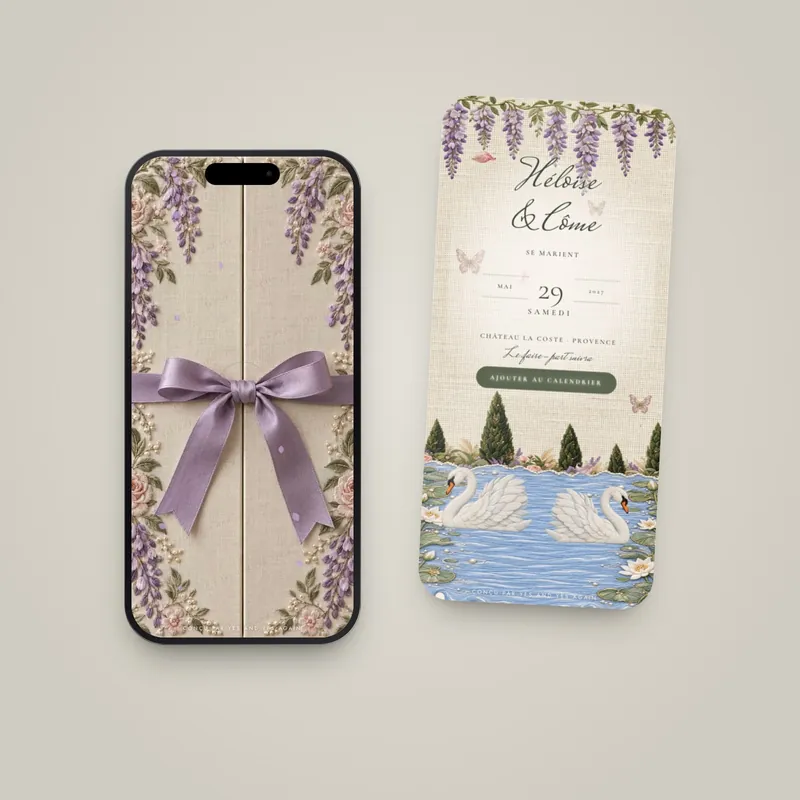 Save the date
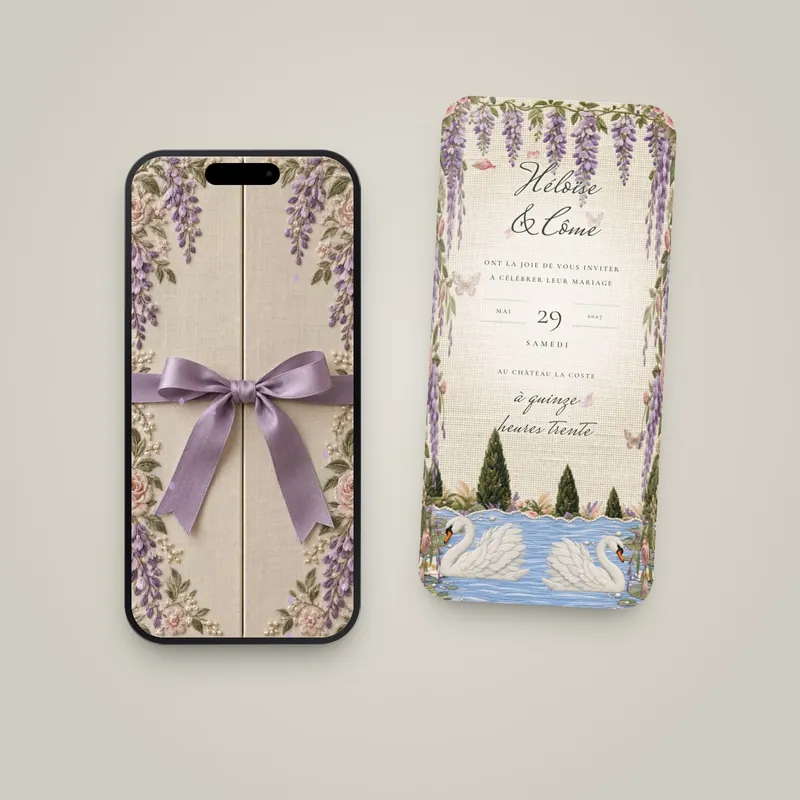
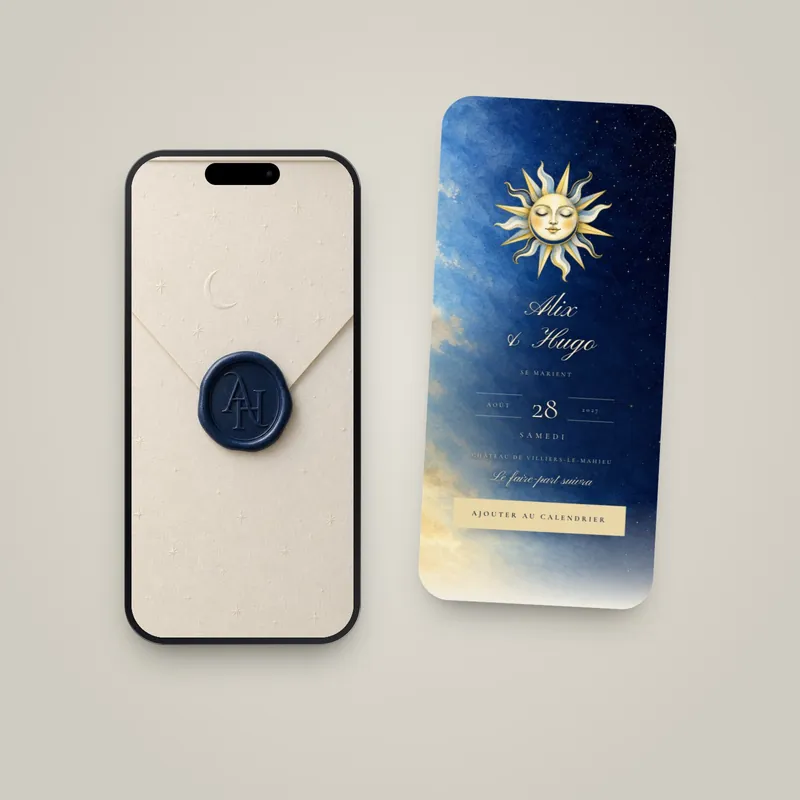 Save the date
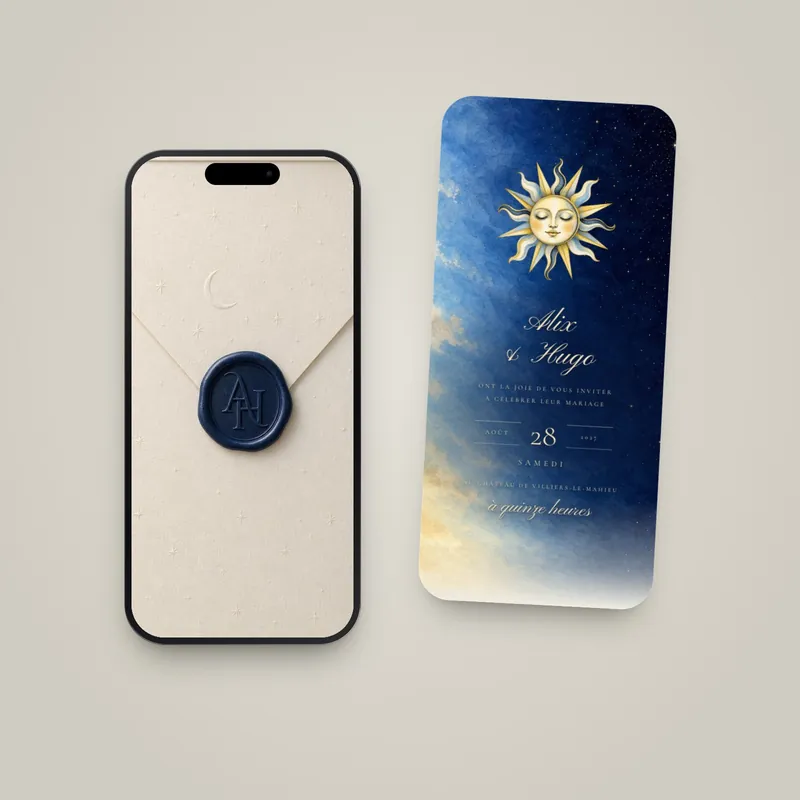
A save the date that opens on their phone
11 animated designs, each with a live demo to open before you order. $29 per design, delivered within 3 business days; included with Signature.
Keep reading
Send save the dates 6 to 8 months ahead, or 9 to 12 for a destination wedding. A timeline for every case, with real dates and the digital option.
Guide · 15 min readWhen to Send Wedding Invitations: The Complete TimelineSend wedding invitations 6 to 8 weeks before the day, earlier for out-of-town guests. Month-by-month table, UK and destination rules, worked dates.
Guide · 10 min readSave the date examples: 60 wordings to copy for every tone60 save the date examples to copy: formal, simple, fun, short, destination, small weddings, adults only, the text for a digital save the date.
Guide · 6 min readSave the date etiquette: who gets one, plus-ones and the rulesSave the date etiquette: who should get one, plus-ones, kids, coworkers, whether everyone must be invited, and what to do if plans change. Clear answers.
All articles · Save the dates · Complete guide: When to send save the dates (local, destination and digital)